- "Traduciendo obsesiones y vacíos: Samuel Beckett en español"
- Thursday 1 December, 10 am
- Salón de Actos FFT
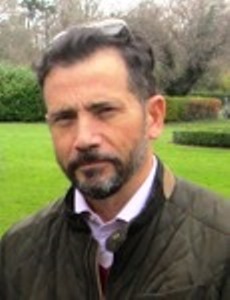
- Jose Francisco Fernández, Universidad de Almería
- Organized by: NETEC / Facultade de Filoloxía e Tradución
Category: News
-
Traduciendo obsesiones y vacíos: Samuel Beckett en español
-
SEDERI 28 CFP: English Renaissance Studies (Pontevedra, 3-5 May 2017)
Registration for the forthcoming SEDERI 28 conference is now open. NETEC participates in the local organizing committee of SEDERI 28, to be held in Pontevedra (Spain), on 3-5 May, 2017.
- Early bird registration ends 3 April, 2017
- Deadline for paper submission ended 15 February, 2017
- See more at conference website: sederi28.wordpress.com
-
The Task of the Translator: Kafka in Icelandic
- "The Task of the Translator: Kafka in Icelandic"
- Friday 29 April , 10 am
- Salón de Actos FFT
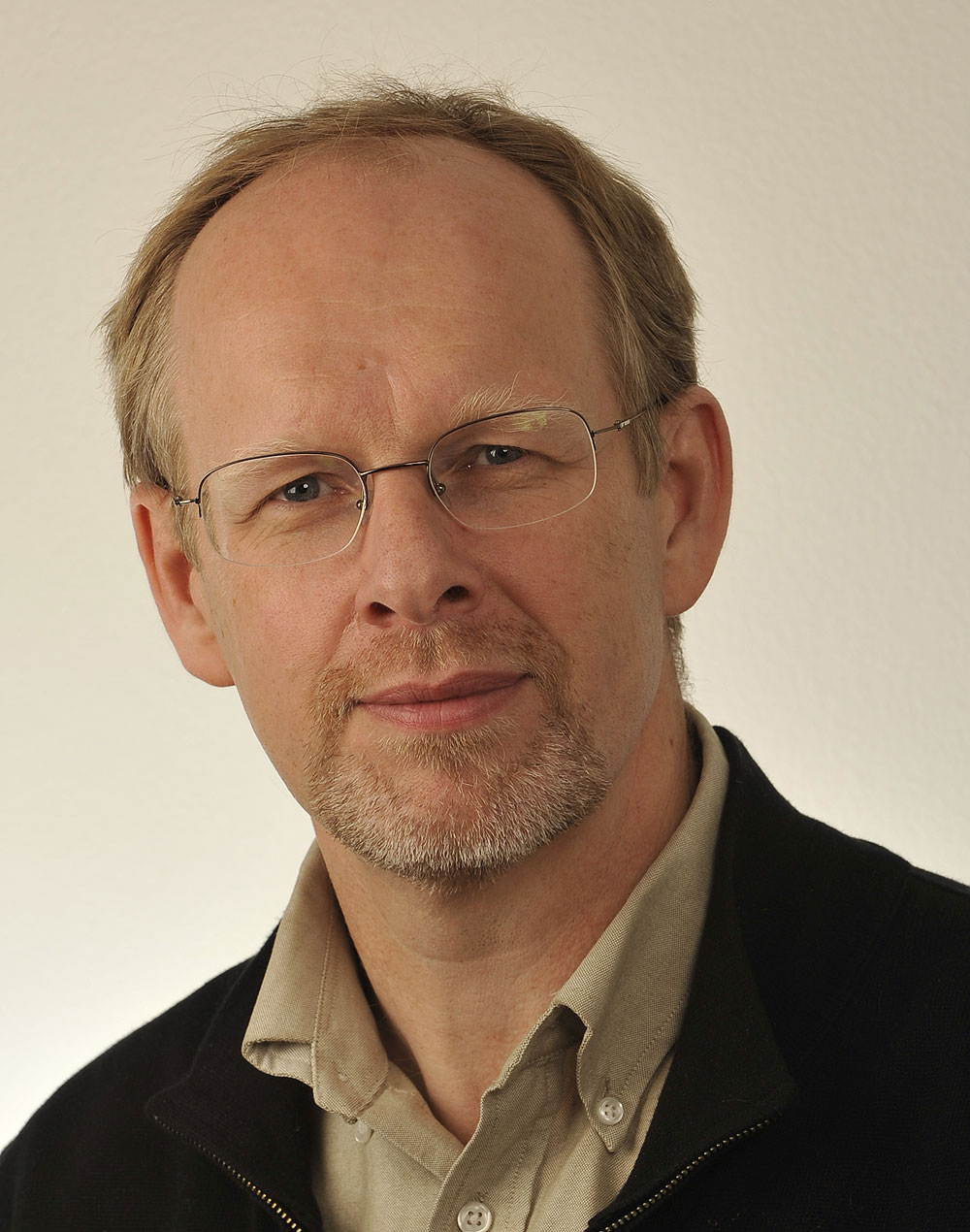
- Ástráður Eysteinsson, Professor of Comparative Literature and Literary Translator, University of Iceland | Háskóli Íslands
- Organized by: NETEC / Grupo de Investigacion T&P
Professor Ástráður Eysteinsson graduated with a BA in German and English from the University of Iceland in 1979. He studied literature and translation studies at the University of Warwick in the UK and finished an MA there in 1981.
In the years 1980-82 he was a student of German, English and Scandinavian studies at University of Cologne in West-Germany, before moving to the USA in 1982 where he took up doctoral studies at the University of Iowa alongside teaching there. He finished his PhD in 1987.
During his years of study abroad Eysteinsson started translating literature into Icelandic. He has been active in that field ever since – he has for example translated Franz Kafka’s oeuvre into Icelandic in collaboration with Eysteinn Þorvaldsson.
Eysteinsson has published his research results in both Icelandic and English, furthermore, he has been an academic editor nationally and internationally.
-
Charlotte Salomon, Graphic Artist: A Feminist Lineage for Jewish Women’s Comics
- "Charlotte Salomon, Graphic Artist: A Feminist Lineage for Jewish Women’s Comics"
- lecture video
- Wednesday 16 , 4 pm
- Salón de Actos FFT
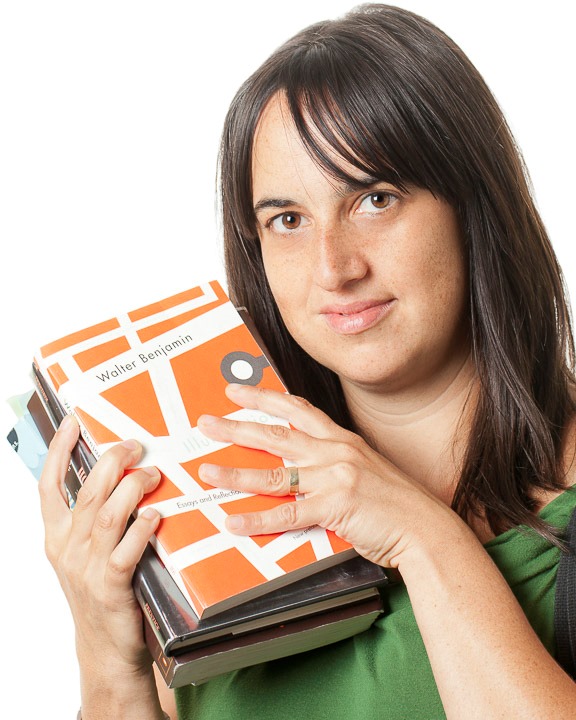
- Prof. Ariela Freedman (Concordia University, Montréal, Canada)
- Organized by: NETEC
Charlotte Salomon was a young Jewish artist from Berlin who fled Germany after Kristallnacht, and who hid in the South of France. From 1940 to 1942, she created over thirteen hundred small gouaches and sketches that together comprised a fictionalized autobiography. Salomon rejected a number of the gouaches, leaving a narrative sequence of nearly eight hundred paintings, which she left in the keeping of a family friend when she was deported to Auschwitz, where she was murdered. The paintings combine text and image. Early in the sequence, she wrote the textual element of the story on separate, semi-transparent pieces of paper, which she taped as an overlay above the paintings. Later on, she incorporated text into the images themselves. The entire series, including the paintings that Salomon rejected, is one of the most extraordinary and understudied artworks of the century. Salomon’s work is one of a kind; it is hard to imagine how she imagined her work would be seen at all, let alone how it might be adequately reproduced. As Griselda Pollock writes, Life? Or Theatre? is “one of the twentieth century’s most challenging art works…Yet, I, for one, am not sure that I can know fully what I am looking at.” But what if we say we are looking at a comic? Leben? Oder Theater? Ein Singespeil (Life? Or Theater? A Melodrama), might be among the most powerful graphic narratives ever drawn and written.
But it is almost entirely absent in critical discourse on comics and on graphic narrative. Part of the reason for Salomon’s absence from comics history is that Life? Or Theater? is not a comic, strictly speaking: it was not drawn to be mass-produced, and was created largely in isolation from a comics tradition. Salomon’s work provides valuable precedent for one of the most significant movements in contemporary comics, graphic memoir and testimonial. In her playful, leading, open title as question — “Life? Or Theatre?”—she introduces the tension inherent in staging autobiography. In her concurrent claim to comics and high art, Salomon anticipates the move of contemporary comics back to the gallery wall. Her foregrounding of the personal and domestic against an implicated dark history prefigures the attempts of writers like Spiegelman, Satrapi and Eisenstein to map their own stories.
Life? Or Theatre? may not be exactly a comic, but it is instead something richer and stranger: a graphic narrative of an ambition and scale that has not yet been replicated, that in many ways anticipates the conventions and preoccupations of contemporary graphic memoirs. This presentation will use the semiotic vocabulary developed by comics theorists to explore Salomon's use of word and image, to argue for Salomon's place in the emergent comics "canon" and her importance as a multidisciplinary artist.
-
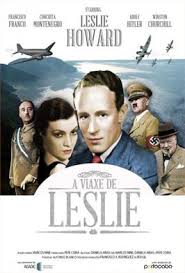
Film “A Viaxe de Leslie” (2014) & Director Marcos Nine
- "A Viaxe de Leslie" (Leslie's Journey) & question session with film director Marcos Nine
- Monday 11 April , 4 pm
- Salón de Actos FFT
- Organized by: NETEC and Facultade de Filoloxía e Tradución
- trailer: elviajedeleslie.com/home-2/
A VIAXE DE LESLIE (Leslie's Journey)
Marcos Nine, 2014 | 75 mins.Filigrana que xoga na ambigua fronteira do documento e a ficción, construída enteiramente con material de arquivo (traballo que lle valeu a Marcos Nine un Mestre Mateo á mellor montaxe), A viaxe de Leslie fala da vida coñecida e da causa (especulada) da morte do actor británico e galán hollywoodense Leslie Howard. Unha trama que viaxa do espionaxe internacional aos entresixos dunha persoalidade peculiar para conducirnos ao que fose a última viaxe de Leslie que lle trouxo, precisamente, a Galicia: o que emprendeu a bordo do avión comercial que foi derribado, sen deixar supervivintes, por un escuadrón alemán fronte á costa de Cedeira durante a Segunda Guerra Mundial. Unha posible (e emocionante) reescritura da historia cuxa tinta son as imaxes que a rutilante carreira de Howard, e o cinematógrafo, foi deixando ao seu paso na convulsa primeira metade do século XX.
-

Translators and the Making of History: Gertrude Stein’s Paradoxical Relationship to France
- "Translators and the Making of History: Gertrude Stein’s Paradoxical Relationship to France"
- lecture video
- December 1st, 10 am
- Salón de Actos, Facultade de Filoloxía e Tradución (FFT).
- Judith Woodsworth, University of Concordia (Montréal).
- Organized by: NETEC & Dpto. de Filoloxía Inglesa, Francesa e Alemá
Abstract
This year marks the twentieth anniversary of the publication of Translators through History. When compiling the first edition in 1995, Jean Delisle and I chose to shine the spotlight on translators and the ways in which they have shaped history. This decision to concentrate on the translator and other agents, rather than the process or the product, was not an obvious choice in a discipline that had hither to been so focused on the text. For centuries, for example, discussions had dealt with how faithful a translation was to the source text or, on the other hand, the way in which translations were made to fit the norms of the target culture. In this book (and particularly in the latest English and French editions), translators are examined in the social, political, economic or religious contexts in which they worked.
In the intervening years, there have been many studies in the field of translation history; it is an area that has thrived, even exploded, although significant gaps remain. My recent work addresses one such gap by looking at writers who translate – at their motivation to translate and at the specific, often complex, tensions that arise with regard to their status as author/translators.
My talk delves into a particular case study, that of writer Gertrude Stein, for whom the act of translation is related to a paradoxical relationship to France and the French language. There was always some degree of non-translation in her translation projects: her alleged, possibly fictitious, translation of Flaubert; her problematic translation of and eventual dispute with a surrealist poet; and her aborted translation of the speeches of Vichy leader Maréchal Pétain. Despite her notoriety as an avant-garde writer and supporter of modern art, Stein the translator was moulded by the events she experienced. To use the words of Martin Luther King, she was among those who were ‘made by history’, as opposed to other translators who could more accurately be described as ‘makers of history’.
-
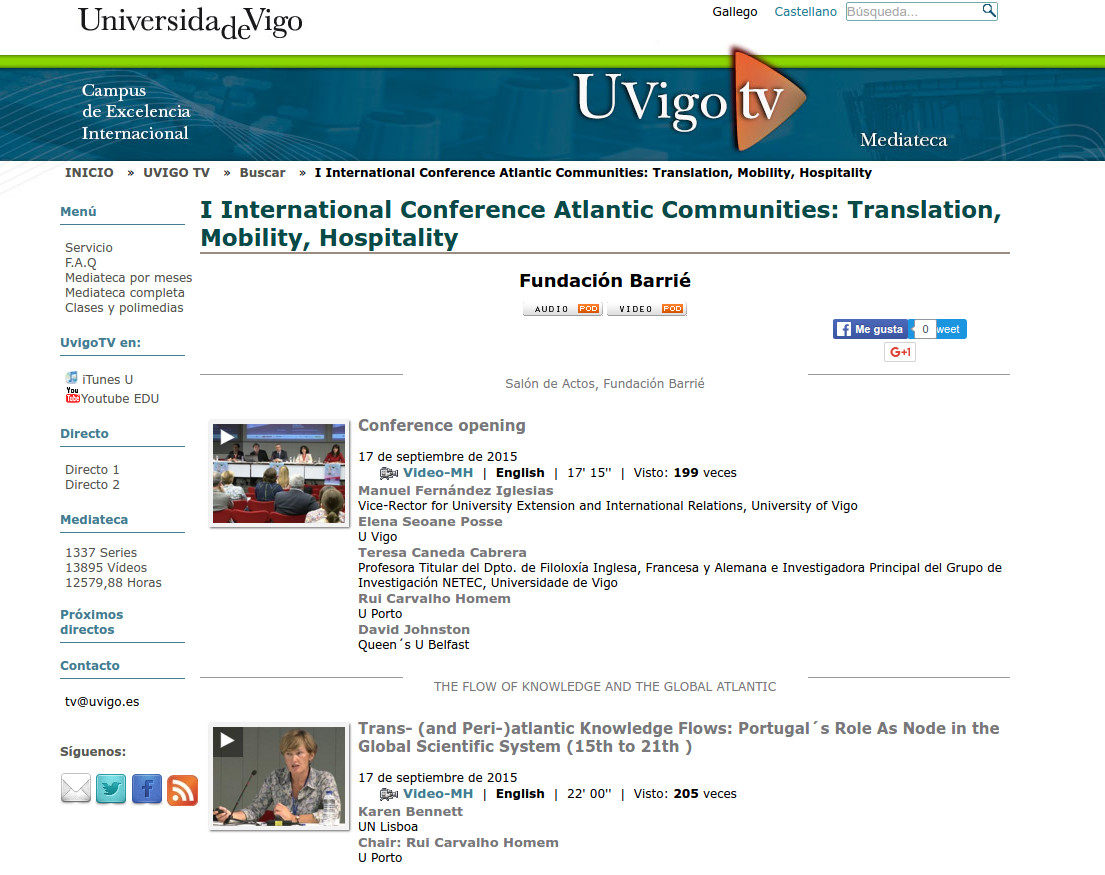
Audiovisual recordings of the I International Conference Atlantic Communities: Translation, Mobility, Hospitality
- "Audiovisual recordings of the I International Conference Atlantic Communities: Translation, Mobility, Hospitality"
- Conference Website
- Videos
Audiovisual recordings of the I International Conference Atlantic Communities: Translation, Mobility, Hospitality, including conference panels, keynote lectures and writers' sessions have been uploaded to the UVigo tv online media services.
-
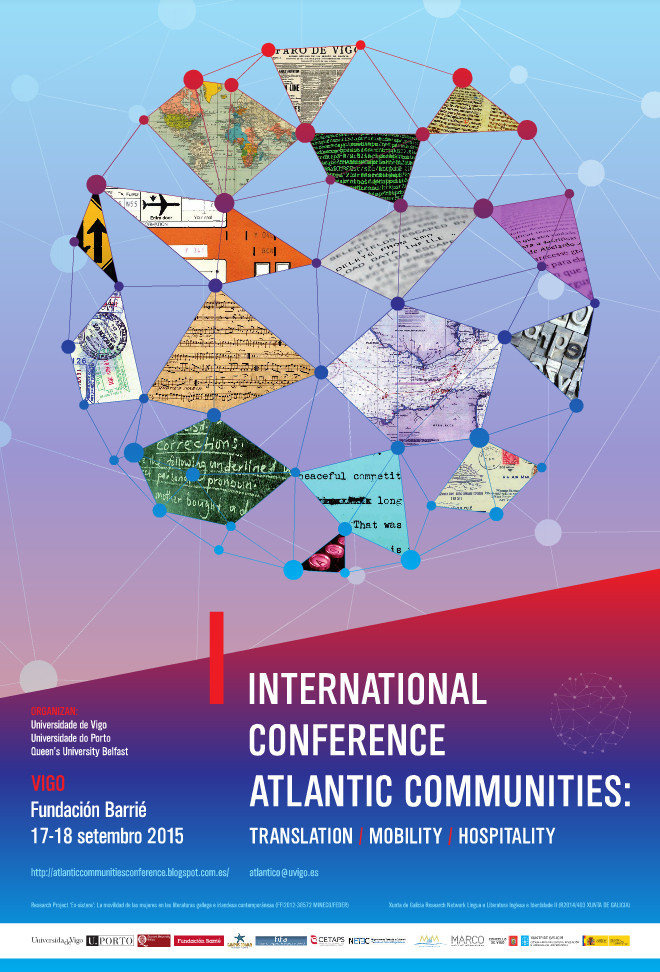
I International Conference Atlantic Communities: Translation, Mobility, Hospitality
- "I International Conference Atlantic Communities: Translation, Mobility, Hospitality"
- 17-18 September 2015
- Fundación Barrié, Vigo.
- Conference Website
This past September, the harbour city of Vigo, traditionally an important site of migration and socioeconomic exchange, hosted the I International Conference Atlantic Communities: Translation, Mobility, Hospitality (Fundación Barrié, 17-18 September). The event was a joint initiative of Teresa Caneda Cabrera (UVigo), Rui Carvalho Homem (U Porto) and David Johnston (Queen’s U Belfast) and was organized by members of the UVigo NETEC research group, Martín Urdiales Shaw, Jorge Figueroa Dorrego, Araceli González Crespán and José Carregal Romero.
Seeking to address the growing interest in the Atlantic as a transnational and cross-cultural space of transit, the conference brought together scholars from the social sciences and the humanities who embarked on fruitful dialogues about confluences and encounters between communities and individuals on both sides of the Atlantic.
This two-day conference was structured around twelve panel sessions on specific, yet extremely varied, topics such as: knowledge flows and the “Global” Atlantic; women’s trans-Atlantic writing; migration; travel fiction; epistolary texts; diasporic literature; music; photography; cinema and theatre and also mass media and communication in trans-Atlantic relations. The notion of a “common” Atlantic identity within contemporary political and socioeconomic scenarios was explicitly challenged in the presentation of the Research Project “Atlantic Future”.
Lively discussions followed the plenary lectures by Professor Charles Forsdick (U Liverpool) and Michael Cronin (Dublin City U) who distinctively focused on the movement and circulation of cultural products and offered exceptionally engaging explorations of translation, mobility and hospitality across the Atlantic. The Conference also offered a venue for the remarkable readings of writers Evelyn Conlon (Not the Same Sky, 2013) and Owen McCafferty (Titanic, 2012).
With stimulating conversations over coffee breaks, receptions and dinner, the event did succeed in generating a sense of fellowship and community. The organizers of the Vigo conference look forward to future Atlantic encounters whether in Porto or Belfast.
-
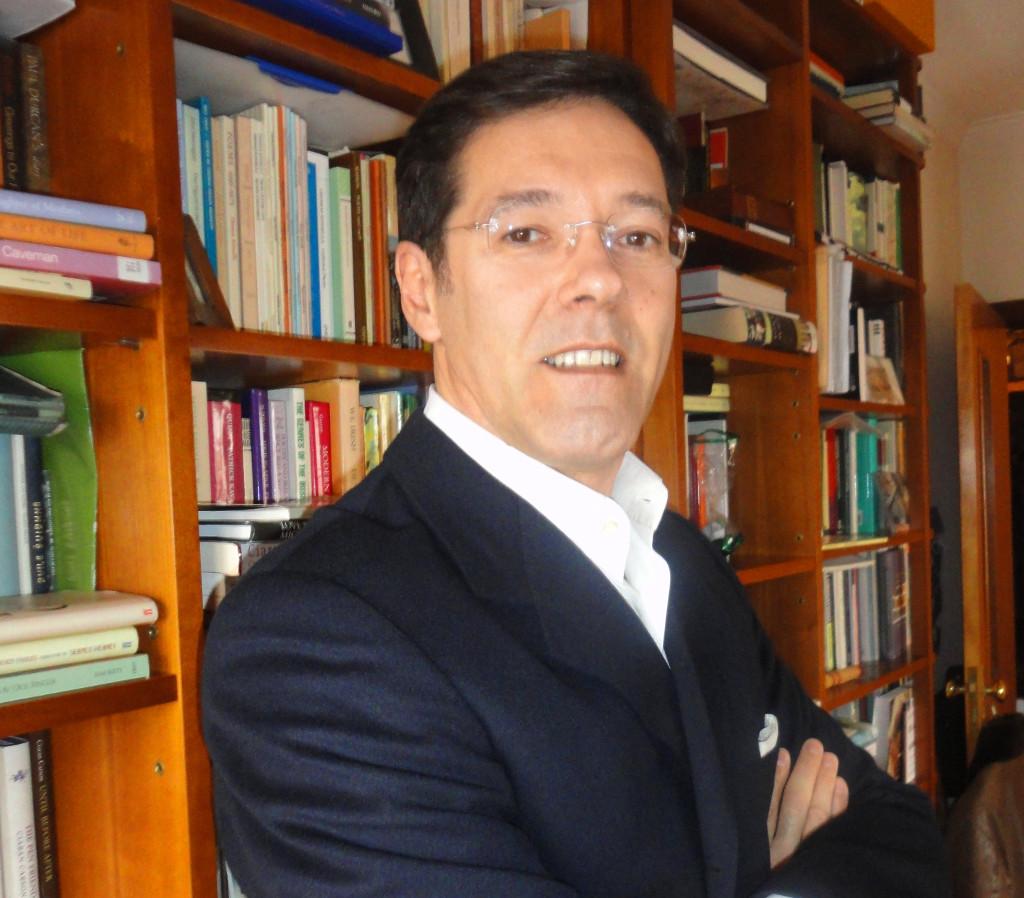
‘The office and devotion of their view’: Gaze and Knowledge in Antony and Cleopatra
- " 'The office and devotion of their view': Gaze and Knowledge in Antony and Cleopatra "
- 16 October, 12 pm.
- Salón de Graos, Facultade de Filoloxía e Tradución (FFT). Vigo campus.
- Rui Carvalho Homem, Catedrático da Universidade do Porto e Presidente da European Shakespeare Research Association.
-
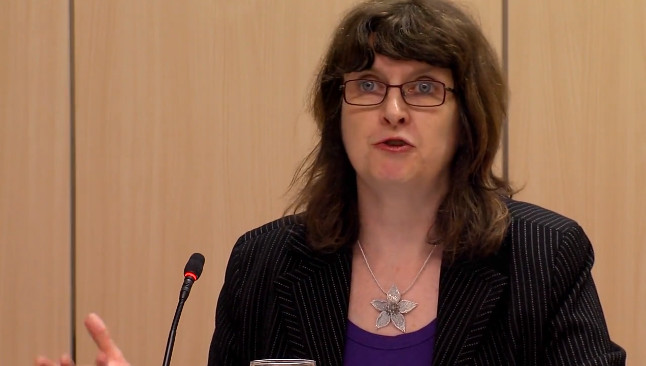
Gender, Music and Performance in James Joyce’s ‘The Dead’
- "Gender, Music and Performance in James Joyce’s ‘The Dead’"
- 29 April, 1 pm.
- Salón de Graos, Facultade de Filoloxía e Tradución (FFT). Vigo campus.
- Anne Fogarty, University College, Dublin.
- Lecture Video